Frauds
Understanding Local Market Shopping Frauds and How to Protect Your Money
Learn how to spot and avoid common local market scams involving UPI codes, fake refunds, and weight manipulation.
- Reviewed by
- Shravya Mishra
- Published
This brief was drafted with the help of an AI system from the official source listed below, then checked against that source and approved by Shravya Mishra before publication. How we work.
Background and Context
Traditional local markets, including weekly street markets, neighborhood kirana stores, and festival bazaars, are a major part of everyday household shopping in India. While digital payments and high-footfall chaotic environments make shopping fast, they have also introduced sophisticated social-engineering and physical deception tactics. Scammers exploit the fast pace, sensory overload, social pressure, and trust inherent in local market interactions.
According to Reserve Bank of India (RBI) and industry reports, digital payment frauds continue to affect millions of users annually, with hundreds of crores lost to social engineering, QR code manipulation, and deceptive payment flows.
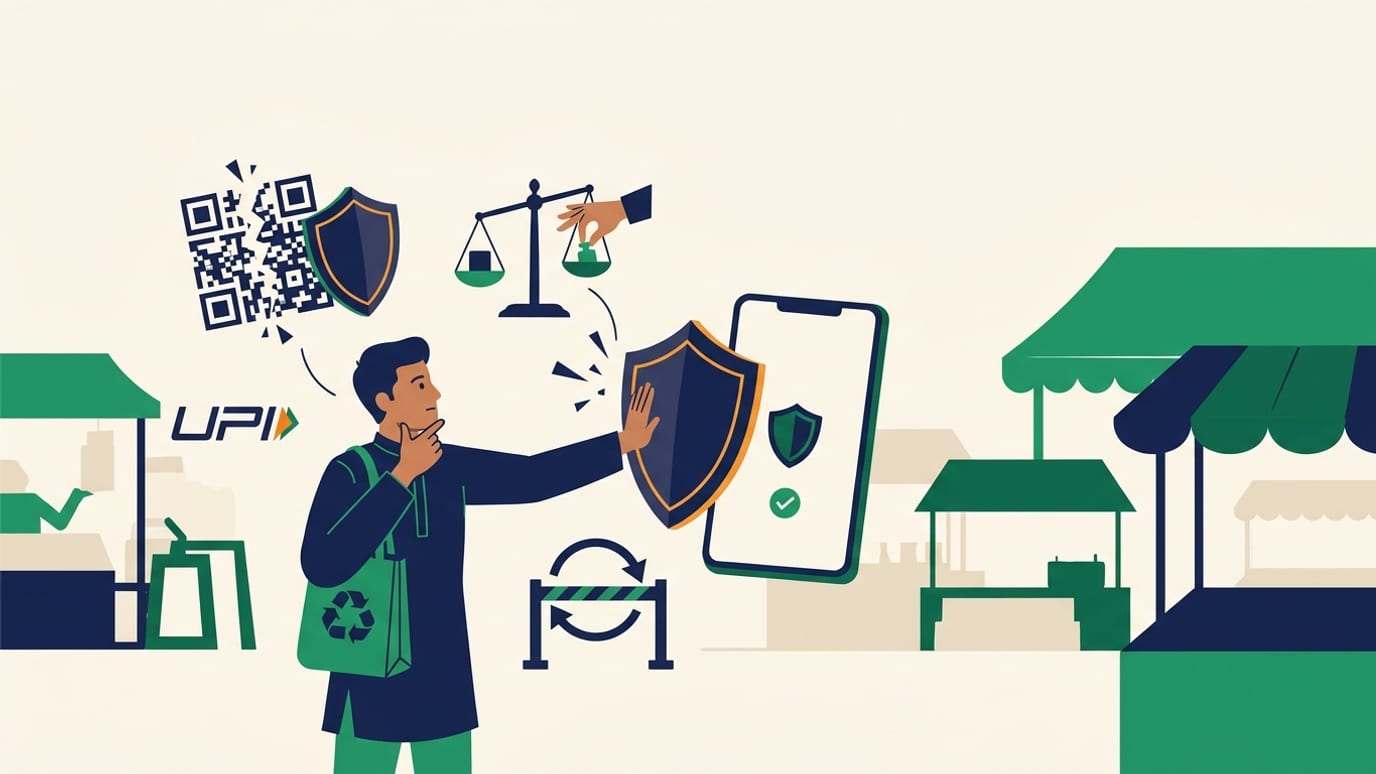
The Tampered or Swapped UPI QR Code Scam
Fraudsters paste fake QR code stickers over the legitimate merchant's payment QR code at tea stalls, vegetable carts, small grocery shops, or parking lots. When an unsuspecting shopper scans the code to pay for their items, the money goes directly to the scammer's account instead of the vendor's. The vendor only realizes it later when they check their soundbox or app ledger and notice no sound or credit alert came through, leading to arguments or loss for the consumer and vendor.
The Reverse UPI or Collect Request Scam
This frequently happens when dealing with local roadside vendors or small service providers who claim a payment failed or needs a verification credit. Alternatively, it can happen if a household member is selling something locally or online and interacting with a local buyer.
The scammer sends a collect request or a QR code under the guise of sending money, issuing a refund, or giving a cashback, but tells the victim to enter their UPI PIN to receive the funds. Entering the UPI PIN authorizes a debit from the victim's bank account, instantly draining money.
Weight and Measurement Manipulation
This is common with loose items like fruits, vegetables, and loose grains sold by itinerant vendors or open-air market stalls. Vendors manipulate scales using heavy trays, un-zeroed digital readouts, magnets, or manual pressure on the scale's rim. For example, a weighing tray alone may weigh 500 grams, or the baseline scale may start at an inflated weight, causing households to pay for two kilograms while receiving only 1.3 kilograms.
The Distraction and Short-Change Trick
This is executed in crowded market lanes through confusion, fake urgency, or rapid-fire cash handling. Short-changing involves handing back less cash balance and acting rushed or dismissive if questioned. Unpackaged overcharging involves charging arbitrary high prices for loose items while bypassing the Maximum Retail Price rule, which legally applies to all packaged goods in India. Distraction pocket or bag theft involves coordinated groups creating artificial crowding or arguments to pick pockets or steal shopping bags while the shopper is distracted.
Common Mistakes Made by Households
Ordinary households, elderly family members who may struggle to read transaction app alerts clearly, and rushed shoppers often make specific errors:
- Entering a UPI PIN blindly after scanning a code or approving a prompt without checking who is receiving the money or verifying if it is a debit instruction.
- Trusting a wall or cart QR code without cross-verifying the merchant's name displayed on the app screen against the shopkeeper's actual name.
- Ignoring app audio or visual confirmation by walking away from a stall before confirming that the merchant's soundbox or app actually announced the payment receipt.
- Failing to check weights and bills, such as accepting loose vegetable or fruit bags without asking the vendor to reset the scale to zero before adding the produce.
Prevention and Actionable Steps
To protect yourself during local market shopping, follow these steps:
- Remember the Golden Rule of UPI: You never need to enter a UPI PIN to receive money, refunds, or cashback. A PIN is strictly for authorizing money to leave your account.
- Verify the Name: Always look at the recipient name on the UPI app screen before entering your PIN and match it with the merchant's identity.
- Check the QR Sticker: Look closely to ensure the QR code hasn't been pasted over with a paper sticker overlay.
- Demand Zero-Reset on Scales: Politely ask fruit and vegetable vendors to reset their weighing scale to zero in front of you before weighing loose goods.
- Know Your Rights: For packaged items, charging above the printed Maximum Retail Price is illegal under Indian consumer law.
What to Do If Fraud Happens
If you fall victim to a scam, take action immediately:
- Immediate Bank Action: Block the compromised UPI handle, debit card, or bank account immediately through your banking app or by calling your bank's official customer care helpline.
- National Cyber Crime Helpline: Call 1930 immediately or register a complaint on the official government portal at cybercrime.gov.in. Prompt reporting increases the chances of freezing funds in the scammer's intermediary account.
- Preserve Evidence: Take screenshots of fraudulent UPI handles, transaction IDs, chat messages, or call logs to support your formal complaint.
Where to report a fraud
If money has already left your account, call first and write later.
National Cybercrime Helpline
Call 1930For UPI, card, net-banking and other online fraud. If money has already gone, call first. Then tell your bank at once: under RBI rules, how much you may bear depends on how quickly you report it.
National Cybercrime Reporting Portal
cybercrime.gov.inTo file a written complaint online, with screenshots and transaction details.
RBI Sachet
sachet.rbi.org.inTo check whether a company is allowed to take deposits, and to report one collecting money without permission.
SEBI SCORES
scores.sebi.gov.inFor complaints about brokers, investment advisers, mutual funds and listed companies.
Common questions
Do I need to enter a UPI PIN to receive a refund or cashback?
No. You never need to enter a UPI PIN to receive money, refunds, or cashback. A PIN is strictly for authorizing money to leave your account.
What number should I call if I experience cyber fraud?
You should immediately call the National Cyber Crime Helpline at 1930 or register a complaint on the official portal at cybercrime.gov.in.
How do fake QR code scams work in local markets?
Fraudsters paste fake QR code stickers over legitimate merchant QR codes so that payments sent by shoppers go directly to the scammer's account instead of the vendor.
Is it legal to charge above the Maximum Retail Price for packaged goods in India?
No, charging above the printed Maximum Retail Price for packaged items is illegal under Indian consumer law.
Sources
- allblogs.in: allblogs.in
- optimizemytravel.com: optimizemytravel.com
- timesofindia.indiatimes.com: indiatimes.com
- razorpay.com: razorpay.com
- zetapp.in: zetapp.in
- quickheal.co.in: quickheal.co.in
- reddit.com: reddit.com
- blog.karlrock.com: karlrock.com
This is general information for education, not investment, tax or legal advice. Rules and rates change; check the official source before acting. Read the full disclaimer.
Spotted a mistake? Tell us.